Introduction
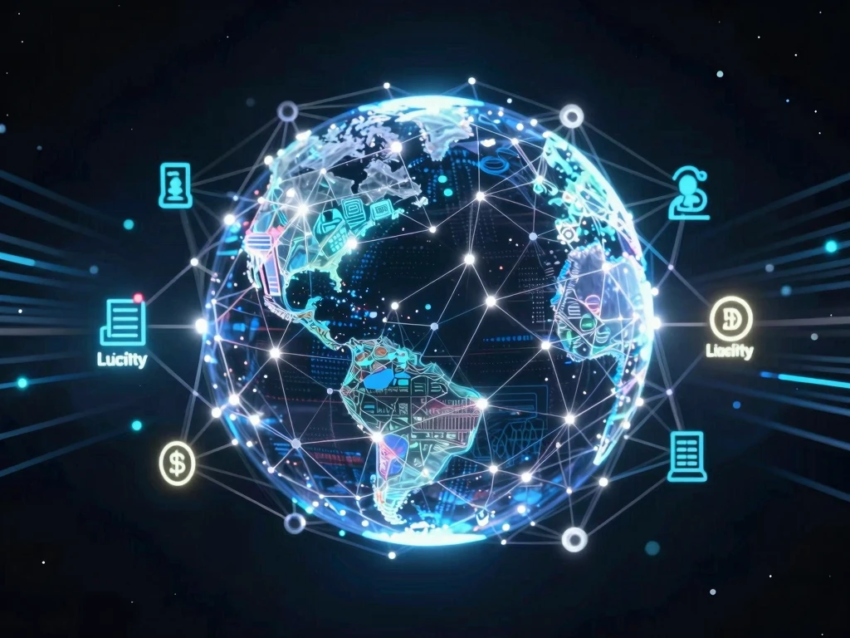
The future of Blockchain and Web3 is becoming one of the most important discussions in modern technology. Blockchain started as the foundation for cryptocurrency, but its potential applications have expanded into decentralized finance, digital ownership, artificial intelligence, gaming, identity, tokenization, payments, and online applications.
Web3 represents a broader vision of an internet where users can have greater control over digital assets, identities, and online interactions. Blockchain provides much of the infrastructure that can make these systems possible through decentralized records, smart contracts, and programmable digital assets.
As the technology develops, the next stage of Blockchain and Web3 may focus less on speculation and more on practical applications. Better scalability, improved wallets, AI integration, real-world asset tokenization, decentralized identity, and stronger security could help decentralized technologies become easier for everyday users and businesses.
This guide explores the future of Blockchain and Web3, including AI, DeFi, tokenization, digital ownership, decentralized applications, emerging technologies, challenges, and opportunities.
What Is the Future of Blockchain and Web3?
The future of Blockchain and Web3 is likely to involve a combination of decentralized infrastructure and mainstream digital services.
Blockchain networks can provide:
- Distributed records
- Smart contracts
- Digital assets
- Programmable transactions
- Decentralized applications
Web3 can use these capabilities to create:
- Digital ownership systems
- Decentralized finance
- Tokenized assets
- Decentralized identity
- Blockchain gaming
- Community governance
- New online marketplaces
The goal is not necessarily to replace every existing internet service. Instead, decentralized technology may become valuable where transparency, shared control, ownership, and programmable transactions provide meaningful benefits.
1. AI and Blockchain Integration
One of the biggest potential developments in the future of Blockchain and Web3 is the integration of artificial intelligence.
AI systems can analyze information, generate content, make predictions, and perform multi-step tasks.
Blockchain can provide:
- Digital transaction infrastructure
- Ownership records
- Programmable payments
- Data verification
- Decentralized systems
Combining AI and blockchain could create new applications.
For example, AI agents could potentially interact with blockchain networks to make authorized payments, purchase digital services, or coordinate transactions.
Potential use cases include:
- AI agent payments
- Machine-to-machine transactions
- Decentralized AI marketplaces
- Data provenance
- AI identity
- Automated financial workflows
However, strong security and permission controls will be necessary when AI systems can perform financial or blockchain-based actions.
2. The Future of Decentralized Finance
Decentralized Finance, or DeFi, is expected to remain an important part of the Web3 ecosystem.
DeFi uses blockchain and smart contracts to provide financial functions such as:
- Lending
- Borrowing
- Trading
- Payments
- Asset management
- Liquidity services
Future DeFi systems may focus on making decentralized financial services easier and safer for ordinary users.
Improved wallets, better interfaces, stronger security, and clearer regulatory frameworks could support wider adoption.
However, DeFi will continue to face risks involving smart-contract vulnerabilities, market volatility, liquidity, scams, and regulatory requirements.
3. Real-World Asset Tokenization
Real-world asset tokenization could become one of the most important blockchain applications.
Tokenization involves representing rights or interests in assets using digital tokens.
Potential examples include:
- Real estate
- Bonds
- Funds
- Commodities
- Securities
- Collectibles
Blockchain can potentially improve certain aspects of asset recordkeeping and settlement.
Tokenized assets could also create new ways to transfer or manage investment interests.
However, tokenization does not automatically establish legal ownership. The connection between the blockchain token and the underlying asset depends on contracts, regulations, and legal structures.
4. The Evolution of Digital Ownership
Digital ownership is a central idea behind Web3.
Traditional online platforms often control digital items within their own systems.
Blockchain technology can allow certain digital assets to exist as tokens that users can hold and transfer.
Future digital ownership models could involve:
- Gaming assets
- Digital memberships
- Tickets
- Collectibles
- Virtual property
- Digital credentials
- Tokenized financial assets
This could create a more transferable digital economy.
However, interoperability will be important because an asset can only move meaningfully between applications when those applications support compatible standards.
5. Next-Generation Blockchain Scalability
Scalability will remain one of the biggest priorities for blockchain development.
As more users and applications enter the ecosystem, networks need to process transactions efficiently.
Important technologies include:
- Layer-2 networks
- Rollup-based systems
- Improved consensus mechanisms
- More efficient blockchain architectures
- Specialized networks
The goal is to increase transaction capacity while maintaining security and decentralization.
Better scalability could make blockchain applications more practical for mainstream use.
6. Better Web3 Wallets
Wallets are one of the most important parts of the Web3 user experience.
Traditional blockchain wallets can be difficult for beginners because users must understand:
- Private keys
- Recovery phrases
- Wallet addresses
- Network fees
- Blockchain networks
- Transaction approvals
Future wallets may hide much of this complexity.
Potential improvements include:
- Easier recovery
- Account abstraction
- Better security
- Multi-factor authentication
- Transaction simulation
- Clearer transaction warnings
- Multi-network support
Better wallets could significantly improve Web3 adoption.
7. Account Abstraction
Account abstraction could help make blockchain accounts more flexible.
Traditional blockchain accounts can require users to directly manage private keys and transaction fees.
Account abstraction allows developers to create more customized account experiences.
Potential features include:
- Social recovery
- Flexible authentication
- Sponsored transactions
- Custom security rules
- Automated transactions
- Multiple authorization methods
This could make Web3 applications feel more similar to traditional internet applications.
8. Decentralized Identity
Digital identity is likely to become increasingly important as online services expand.
Web3-based decentralized identity systems could give users more control over certain credentials.
Potential applications include:
- Educational certificates
- Professional qualifications
- Digital memberships
- Age verification
- Online authentication
- Digital credentials
Instead of repeatedly providing the same information to different services, users could potentially present verified credentials when needed.
Privacy will be especially important because identity information can be sensitive.
9. Blockchain and Web3 Gaming
Gaming could remain an important area for digital ownership.
Blockchain-based gaming can allow certain game assets to exist as digital tokens.
Potential features include:
- Player-owned items
- Digital collectibles
- Tokenized rewards
- Blockchain marketplaces
- Virtual assets
The future of Web3 gaming will likely depend on gameplay quality.
Players generally want games that are entertaining, accessible, and responsive. Blockchain features should support the gaming experience rather than make it more complicated.
10. Decentralized Social Media
Traditional social media platforms are generally controlled by centralized companies.
Web3 developers are exploring decentralized social networks that could provide:
- Portable identities
- User-controlled profiles
- Community governance
- Portable social information
- Reduced platform dependence
One potential advantage is that users may be able to maintain a digital identity across compatible platforms.
However, decentralized social networks face major challenges involving moderation, spam, privacy, scalability, and sustainable business models.
11. Stablecoins and Blockchain Payments
Stablecoins could play an important role in the future of digital payments.
Stablecoins are digital assets designed to maintain relatively stable values, often by referencing fiat currencies or other assets.
Potential uses include:
- Cross-border payments
- Online commerce
- Business settlements
- Remittances
- Digital transfers
- DeFi applications
Blockchain-based payments could potentially operate continuously across geographic boundaries.
However, stablecoin users should understand the structure, reserves, issuer, redemption process, and applicable regulations associated with each asset.
12. Blockchain Interoperability
The blockchain ecosystem includes many different networks.
Interoperability technology aims to allow these networks to communicate and exchange information or assets.
Potential benefits include:
- Cross-chain applications
- Asset transfers
- Shared liquidity
- Multi-chain dApps
- Data communication
Improved interoperability could reduce fragmentation and make Web3 applications easier to use.
However, cross-chain systems can introduce additional security risks, so developers must carefully evaluate bridges and interoperability protocols.
13. Decentralized Physical Infrastructure
Another emerging area is decentralized physical infrastructure.
These networks use decentralized models and economic incentives to coordinate physical resources.
Potential examples include:
- Wireless networks
- Computing resources
- Mapping
- Sensors
- Storage
- Energy infrastructure
The concept could allow communities or independent participants to contribute infrastructure rather than relying entirely on a single company.
The success of these systems will depend on real-world demand, reliability, incentives, regulation, and cost.
14. Decentralized Storage
Data storage is another area where decentralized technology could have a long-term role.
Traditional cloud storage depends primarily on centralized providers.
Decentralized storage distributes data or storage responsibilities across networks of participants.
Potential benefits include:
- Distributed infrastructure
- Data redundancy
- Alternative storage options
- Censorship resistance
- New pricing models
However, decentralized storage must still compete with traditional cloud services on performance, reliability, cost, privacy, and ease of use.
15. Blockchain Privacy Technologies
Blockchain transparency can be useful, but it can also create privacy challenges.
Future blockchain systems may increasingly use privacy technologies such as:
- Zero-knowledge proofs
- Selective disclosure
- Confidential transactions
- Privacy-preserving computation
These technologies can potentially allow users to prove information without revealing unnecessary data.
For example, a user might prove that they meet a specific requirement without exposing all of their personal information.
Privacy technology could become particularly important for financial services, identity, healthcare, and enterprise applications.
16. Web3 Security and Regulation
Security and regulation will strongly influence the future of Web3.
Users and businesses may face risks involving:
- Smart-contract vulnerabilities
- Wallet theft
- Phishing
- Malicious applications
- Private-key loss
- Bridge attacks
- Fraud
Developers will need stronger security practices, including testing, audits, monitoring, access controls, and secure infrastructure.
Regulation will also influence how companies develop and operate blockchain-based services.
Clearer legal frameworks could help businesses understand their responsibilities and encourage responsible innovation.
17. Blockchain in Supply Chains
Blockchain could continue to be explored for supply-chain management.
A distributed ledger can provide shared records between organizations.
Potential benefits include:
- Product traceability
- Shared information
- Auditability
- Transaction records
- Supply-chain transparency
However, blockchain cannot automatically verify whether real-world data is accurate.
Reliable sensors, verification processes, and trusted data sources remain necessary.
18. The Future of DAOs
Decentralized Autonomous Organizations, or DAOs, may continue evolving as a model for digital community governance.
DAOs can use blockchain-based systems to coordinate:
- Communities
- Protocols
- Investments
- Online projects
- Digital organizations
Future DAO systems may focus on improving voting, delegation, transparency, accountability, and decision-making.
However, governance can be complicated, and token-based voting does not always guarantee fair or effective decision-making.
19. Blockchain and Enterprise Technology
Businesses are likely to continue experimenting with blockchain where it provides a clear advantage.
Potential enterprise applications include:
- Digital payments
- Asset tokenization
- Supply-chain tracking
- Digital credentials
- Identity management
- Automated agreements
- Data verification
Companies should carefully compare blockchain with conventional databases and cloud systems.
Blockchain makes the most sense when multiple parties need shared records or when digital assets and programmable ownership are important.
20. The Rise of Practical Web3
One of the biggest changes in the future may be a shift from speculative applications toward practical Web3 products.
Future Web3 applications could focus on:
- Payments
- Identity
- Digital ownership
- Financial services
- AI agents
- Gaming
- Business automation
- Tokenization
For mainstream adoption, users will expect Web3 applications to be simple, fast, secure, and useful.
Technology that requires users to understand complicated blockchain infrastructure may struggle to reach a broad audience.
Benefits of the Future of Blockchain and Web3
The continued development of decentralized technologies could provide several benefits.
Greater Digital Ownership
Users may gain more control over certain digital assets.
Programmable Transactions
Smart contracts can automate predefined rules.
Global Payments
Blockchain networks can support digital transactions across geographic boundaries.
Financial Innovation
DeFi and tokenization can create new financial applications.
AI Integration
Blockchain can potentially provide transaction and ownership infrastructure for AI agents.
New Internet Models
Web3 can create alternatives to certain centralized digital platforms.
Challenges for the Future
Despite the potential, Blockchain and Web3 still face major obstacles.
Scalability
Networks must support growing usage without sacrificing performance.
Security
Wallets, smart contracts, bridges, and applications must become more secure.
Regulation
Businesses need clearer and more consistent legal frameworks.
Usability
Blockchain technology needs to become easier for ordinary users.
Privacy
Users need better control over sensitive information.
Interoperability
Different networks need safer ways to communicate.
Adoption
Web3 applications must provide clear value compared with traditional services.
How Businesses Can Prepare for Web3
Businesses interested in Blockchain and Web3 should start with practical use cases.
A simple strategy is:
- Identify a real business problem.
- Determine whether blockchain provides a genuine advantage.
- Select an appropriate technology.
- Test the solution on a small scale.
- Evaluate security and privacy.
- Review legal and regulatory requirements.
- Measure the results.
- Expand successful applications gradually.
This approach can reduce unnecessary technology spending while allowing businesses to explore emerging opportunities.
How Individuals Can Prepare for the Web3 Future
Individuals can prepare by learning the fundamentals.
Important areas include:
- Blockchain basics
- Cryptocurrency
- Digital wallets
- Smart contracts
- DeFi
- NFTs
- Tokenization
- Web3 security
- Decentralized identity
- AI and blockchain
Users should focus on understanding how the technology works instead of simply following short-term market trends.
Frequently Asked Questions
What Is the Future of Blockchain?
The future of blockchain may involve payments, tokenization, digital identity, smart contracts, AI agents, financial applications, and other decentralized services.
Will Web3 Replace Web2?
Web3 is unlikely to completely replace Web2. Instead, decentralized technologies may become integrated into existing internet services where they provide meaningful advantages.
Will AI and Blockchain Work Together?
AI and blockchain can complement each other. AI can perform analysis and automation, while blockchain can provide transaction, ownership, and verification infrastructure.
Will NFTs Still Matter?
NFT technology may continue to evolve beyond digital art into areas such as tickets, memberships, gaming, credentials, and digital ownership.
Is Blockchain Safe?
Blockchain networks can provide strong security properties, but wallets, smart contracts, applications, and users can still introduce vulnerabilities.
Conclusion
The future of Blockchain and Web3 is likely to be defined by practical applications rather than speculation alone.
AI integration, decentralized finance, real-world asset tokenization, stablecoins, digital ownership, decentralized identity, blockchain gaming, interoperability, privacy technologies, and improved wallets could all play important roles in the next generation of decentralized technology.
Among these developments, AI and blockchain integration could be particularly significant. AI agents may eventually interact with blockchain networks to make authorized payments, manage digital assets, and perform automated transactions.
At the same time, Web3 must overcome major challenges involving scalability, security, regulation, privacy, usability, and interoperability.
The most successful blockchain and Web3 applications will likely be those that hide technical complexity while providing clear benefits to users.
Blockchain may become an important layer of digital infrastructure, while Web3 could influence how people manage digital ownership, identity, financial services, and online interactions.
The future will not necessarily be a completely decentralized internet. Instead, the most realistic outcome may be a combination of centralized and decentralized technologies working together.
As blockchain technology matures, its greatest impact may come from solving practical problems and creating new digital experiences that are faster, safer, more transparent, and more user-controlled.